
Slide Shows

Module 1: Understanding MPNs

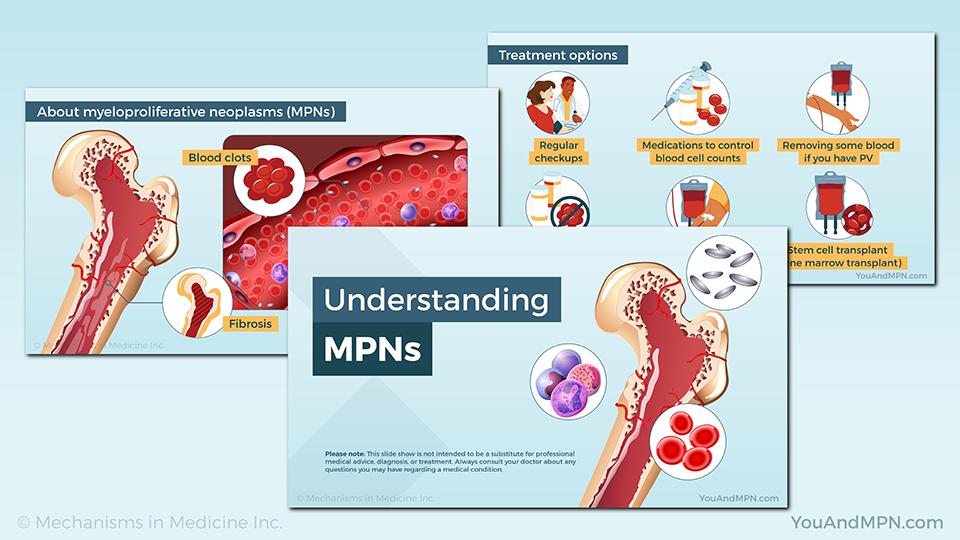
Understanding MPNs
This slide show helps you learn about myeloproliferative neoplasms (MPNs). It explains the different types [essential thrombocythemia (ET), polycythemia vera (PV), and myelofibrosis (MF)], and what they mean for your health. You'll also find out about possible causes, signs and symptoms, how doctors make a diagnosis (including bone marrow biopsy), and treatment options.
View now

Module 2: Essential Thrombocythemia (ET)

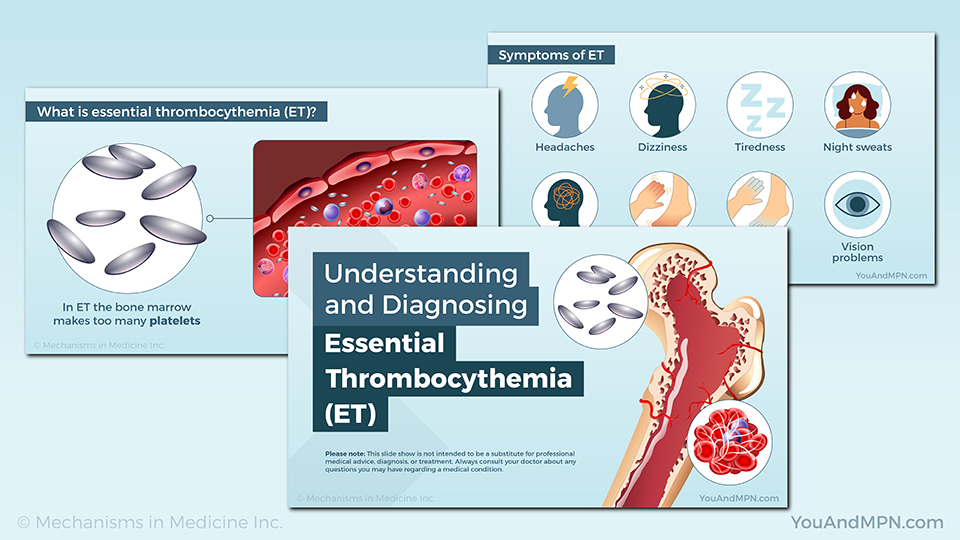
Understanding and Diagnosing Essential Thrombocythemia (ET)
This slide show helps you understand essential thrombocythemia (ET), a type of myeloproliferative neoplasm (MPN) in which the bone marrow makes too many platelets. You'll learn how blood cells are produced, why excess platelets can lead to clotting or bleeding complications, and what symptoms to watch for. The slide show also explains common genetic mutations such as JAK2, CALR, and MPL, how doctors confirm the diagnosis through blood tests and bone marrow biopsy, and what care may look like going forward.
View now
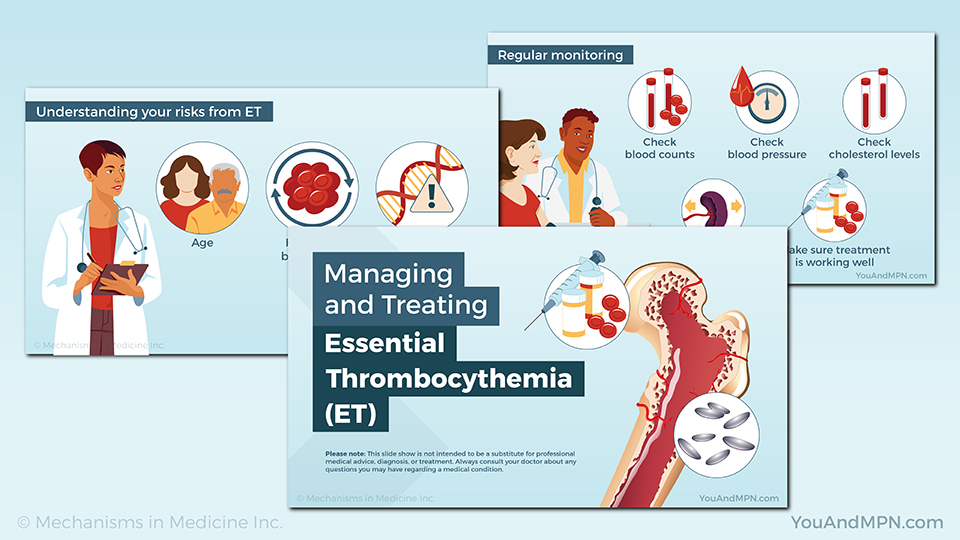
Managing and Treating Essential Thrombocythemia (ET)
This slide show explains how the management and treatment of essential thrombocythemia (ET) focuses on lowering the risk of blood clots and bleeding, preventing heart attack and stroke, managing symptoms, and supporting quality of life. You'll learn how doctors determine risk level based on age, clot history, and gene mutations, and how that guides treatment decisions. The slide show reviews healthy lifestyle changes, low-dose aspirin, and medications, including cytoreductive therapy (hydroxyurea and anagrelide), interferon therapy (pegylated interferon), and newer therapies for advanced disease. It also highlights regular monitoring, possible progression to myelofibrosis, and clinical trials. With proper monitoring and treatment, many people with ET can live long, full lives.
View now

Module 3: Polycythemia Vera (PV)

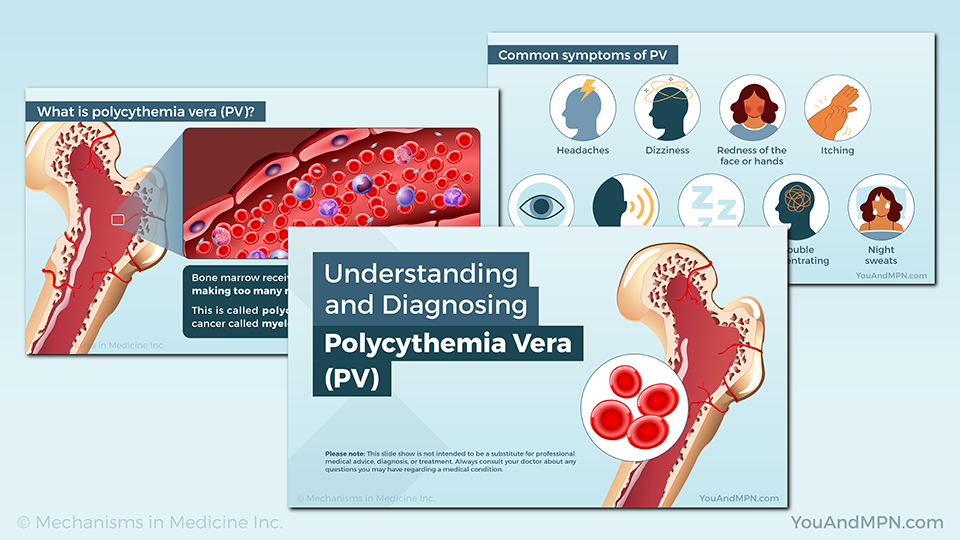
Understanding and Diagnosing Polycythemia Vera (PV)
This slide show helps you understand polycythemia vera (PV), a type of myeloproliferative neoplasm (MPN) in which the bone marrow produces too many red blood cells. You'll learn how blood cells are made and why having too many red blood cells can thicken the blood, increasing the risk of clots (which can cause heart attacks, strokes, or leg blockages), bleeding problems, and an enlarged spleen. The slide show also covers key signs and symptoms, the role of the JAK2 mutation, blood tests, bone marrow biopsy, and steps you can take after diagnosis.
View now
Managing and Treating Polycythemia Vera (PV)
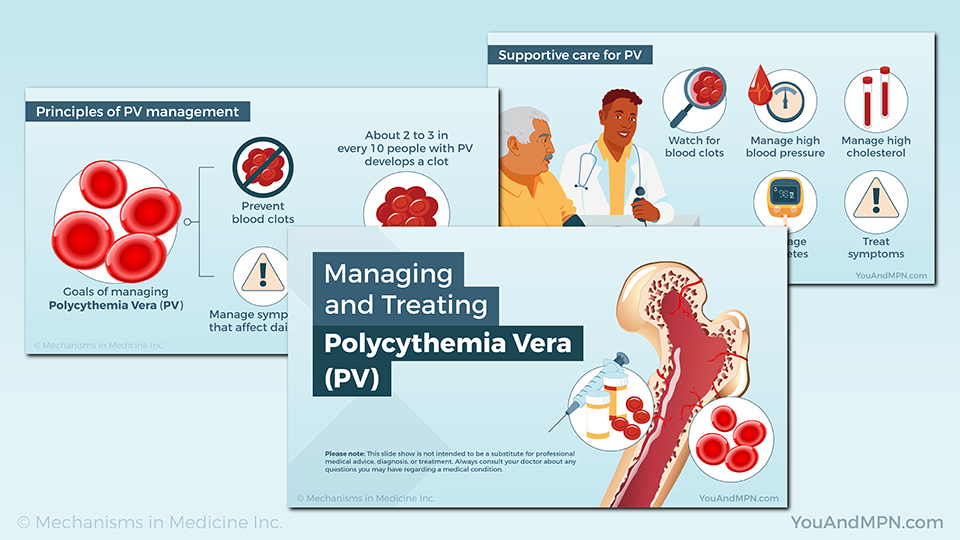
This slide show explains how polycythemia vera (PV) is managed and treated to help prevent blood clots and bleeding, reduce the risk of strokes and heart attacks, keep blood counts in a safe range, and manage symptoms that affect daily life. You'll learn how doctors determine your risk level and how that guides treatment choices. The slide show reviews common treatments such as phlebotomy, low-dose aspirin, and medications including hydroxyurea, interferon, and ruxolitinib. It also explains supportive care, regular monitoring, possible disease progression, and the role of clinical trials in developing new treatment options.
View now

Module 4: Myelofibrosis (MF)

Understanding and Diagnosing Myelofibrosis (MF)
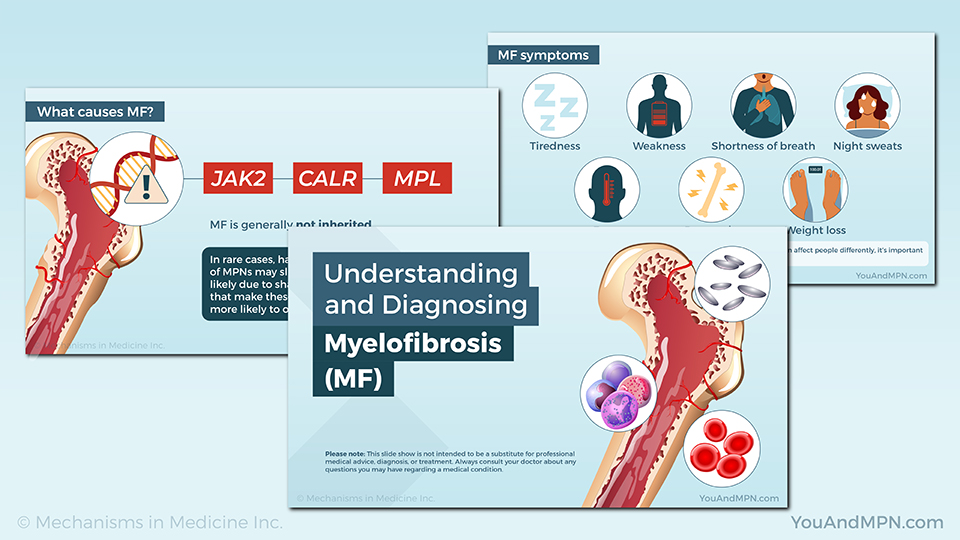
This slide show helps you understand myelofibrosis (MF), a type of myeloproliferative neoplasm (MPN) in which scar tissue builds up in the bone marrow and interferes with normal blood cell production. You'll learn how MF develops, the role of gene mutations such as JAK2, CALR, and MPL, and the difference between primary and secondary MF. The slide show also explains common symptoms, how MF can affect organs like the spleen, how doctors confirm the diagnosis through blood tests and bone marrow biopsy, and what to expect after diagnosis.
View now
Managing and Treating Myelofibrosis (MF)
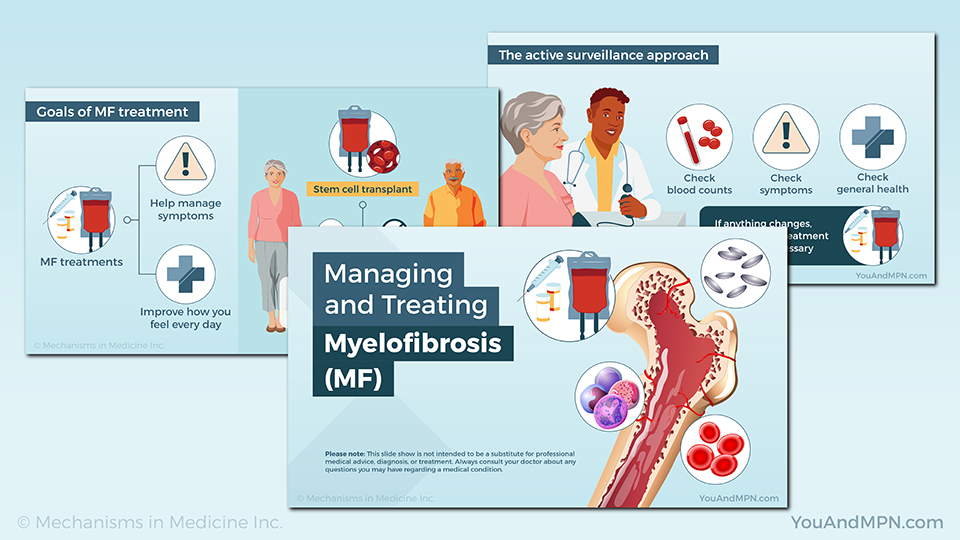
This slide show helps you understand how myelofibrosis (MF) is managed and treated. You'll learn about the goals of treatment, including relieving symptoms such as fatigue and pain, reducing spleen size if your spleen becomes enlarged, improving blood cell counts, and helping you feel as well as possible. It also explains how doctors assess your risk of complications and disease progression, and when approaches such as active surveillance, medications called JAK inhibitors (including ruxolitinib, fedratinib, pacritinib, and momelotinib), or stem cell transplant may be used. The slide show also reviews supportive care, anemia treatments, clinical trials, and living well with MF.
View now