
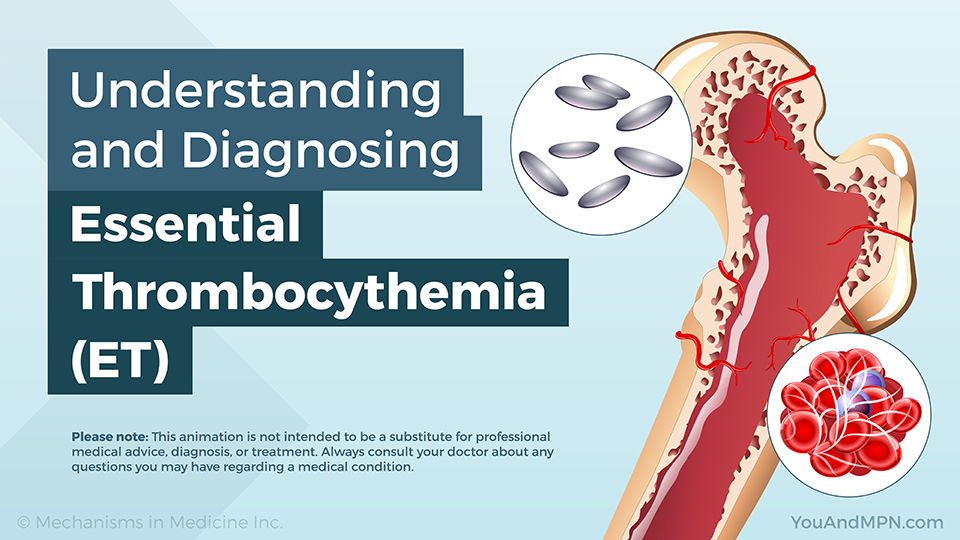
Understanding and Diagnosing Essential Thrombocythemia (ET) — Animation
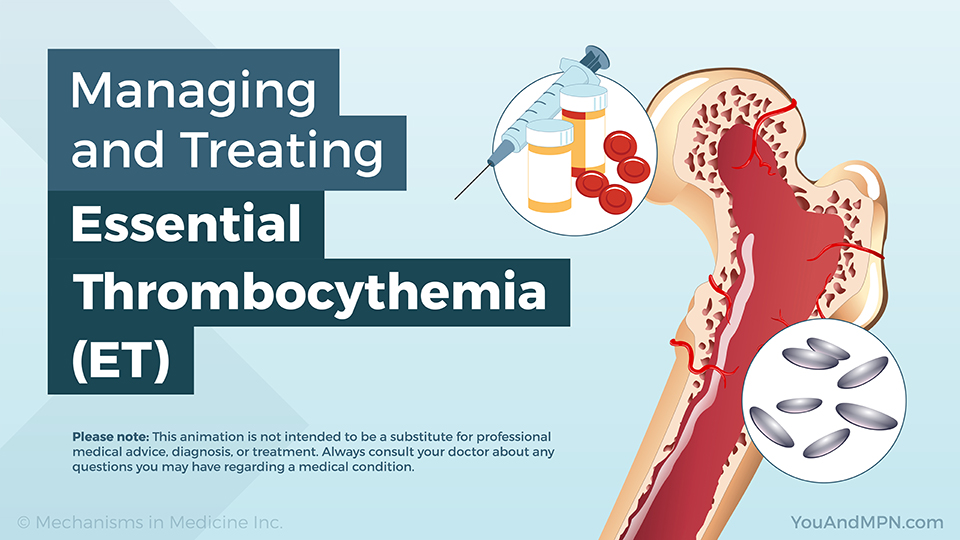
Managing and Treating Essential Thrombocythemia (ET) — Animation
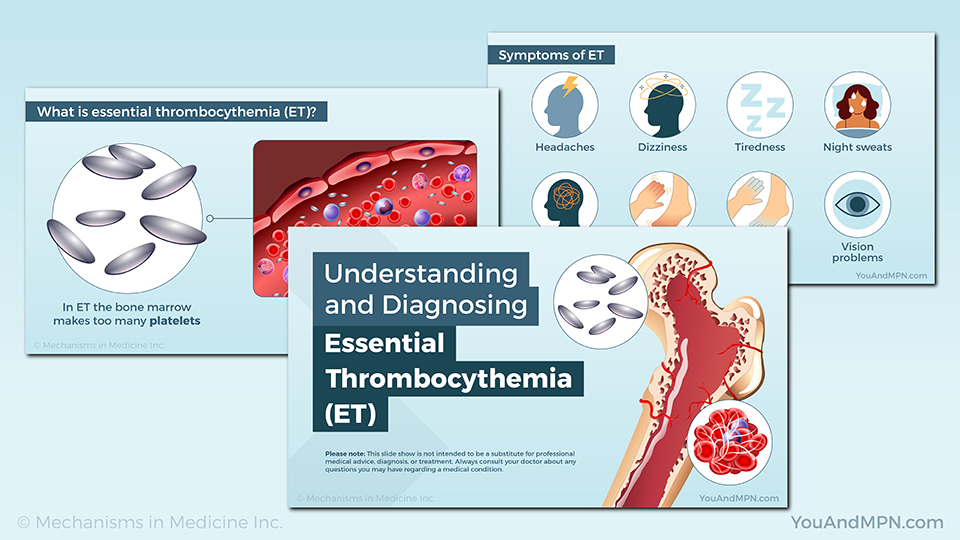
Understanding and Diagnosing Essential Thrombocythemia (ET) — Slide Show
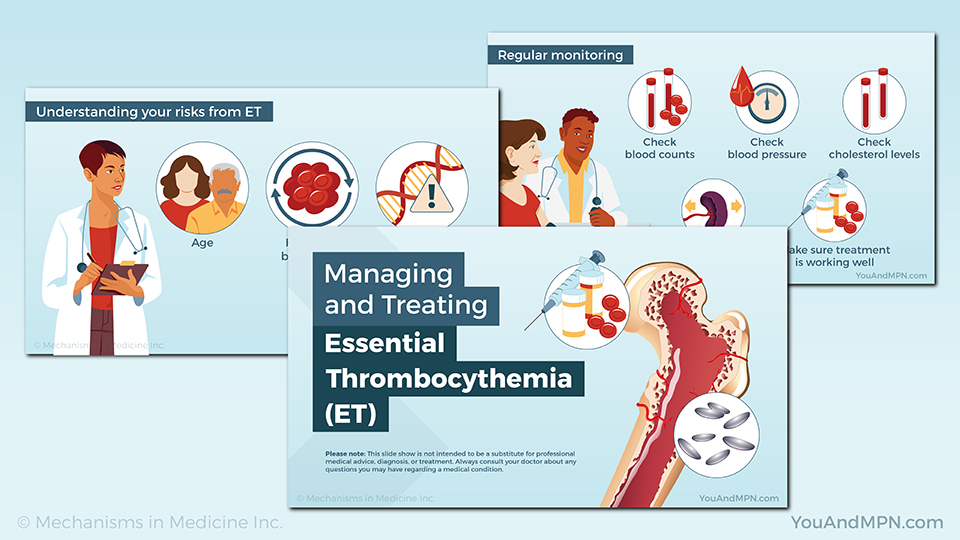
Managing and Treating Essential Thrombocythemia (ET) — Slide Show

1.
What is essential thrombocythemia (ET)?

2.
Why and how did my essential thrombocythemia (ET) arise?
3.
How is essential thrombocythemia (ET) diagnosed?
4.
What are the signs, symptoms, and expectations of living with ET?
5.
What are the risks with essential thrombocythemia (ET)?
6.
How is essential thrombocythemia (ET) managed and treated?

7.
Janeana's story: How did you find out you had essential thrombocythemia (ET)?
8.
Janeana's story: What challenges and successes have you had with ET treatment?
9.
Janeana's story: What advice do you have for others on their journey with ET?
How is essential thrombocythemia (ET) managed and treated? — Expert Video
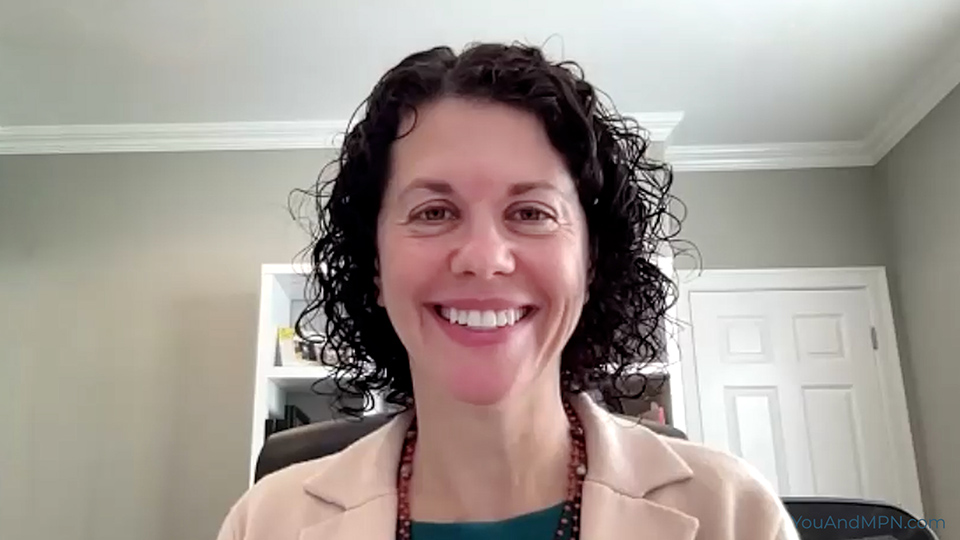
In this video, Dr. Gabriela Hobbs explains how essential thrombocythemia (ET) is managed and treated. Management begins with assessing the patient's risk of blood clots to determine if aspirin or medications to lower platelet counts (cytoreductive therapy) are needed. High-risk patients may receive hydroxyurea, interferons (like Pegasys or ropeginterferon), or occasionally ruxolitinib or anagrelide. Dr. Hobbs also discusses the importance of patients staying in communicaton with their care team, and how treatment decisions take into account a patient's risk for bleeding and disease-related symptoms. She provides an overview of special considerations for younger patients, particularly women planning pregnancy. Finally, Dr. Hobbs highlights emerging therapies under study that aim to better control blood counts and reduce mutation levels in ET.
Click here to take our SURVEY
Your feedback is important to us! We will use your feedback to develop future areas of content about myeloproliferative neoplasms which will help other patients, caregivers, and families.
Other Modules:
Understanding and Diagnosing Essential Thrombocythemia (ET) — Animation
Managing and Treating Essential Thrombocythemia (ET) — Animation
Understanding and Diagnosing Essential Thrombocythemia (ET) — Slide Show
Managing and Treating Essential Thrombocythemia (ET) — Slide Show
1.
What is essential thrombocythemia (ET)?
2.
Why and how did my essential thrombocythemia (ET) arise?
3.
How is essential thrombocythemia (ET) diagnosed?
4.
What are the signs, symptoms, and expectations of living with ET?
5.
What are the risks with essential thrombocythemia (ET)?
6.
How is essential thrombocythemia (ET) managed and treated?
7.
Janeana's story: How did you find out you had essential thrombocythemia (ET)?
8.
Janeana's story: What challenges and successes have you had with ET treatment?
9.
Janeana's story: What advice do you have for others on their journey with ET?